
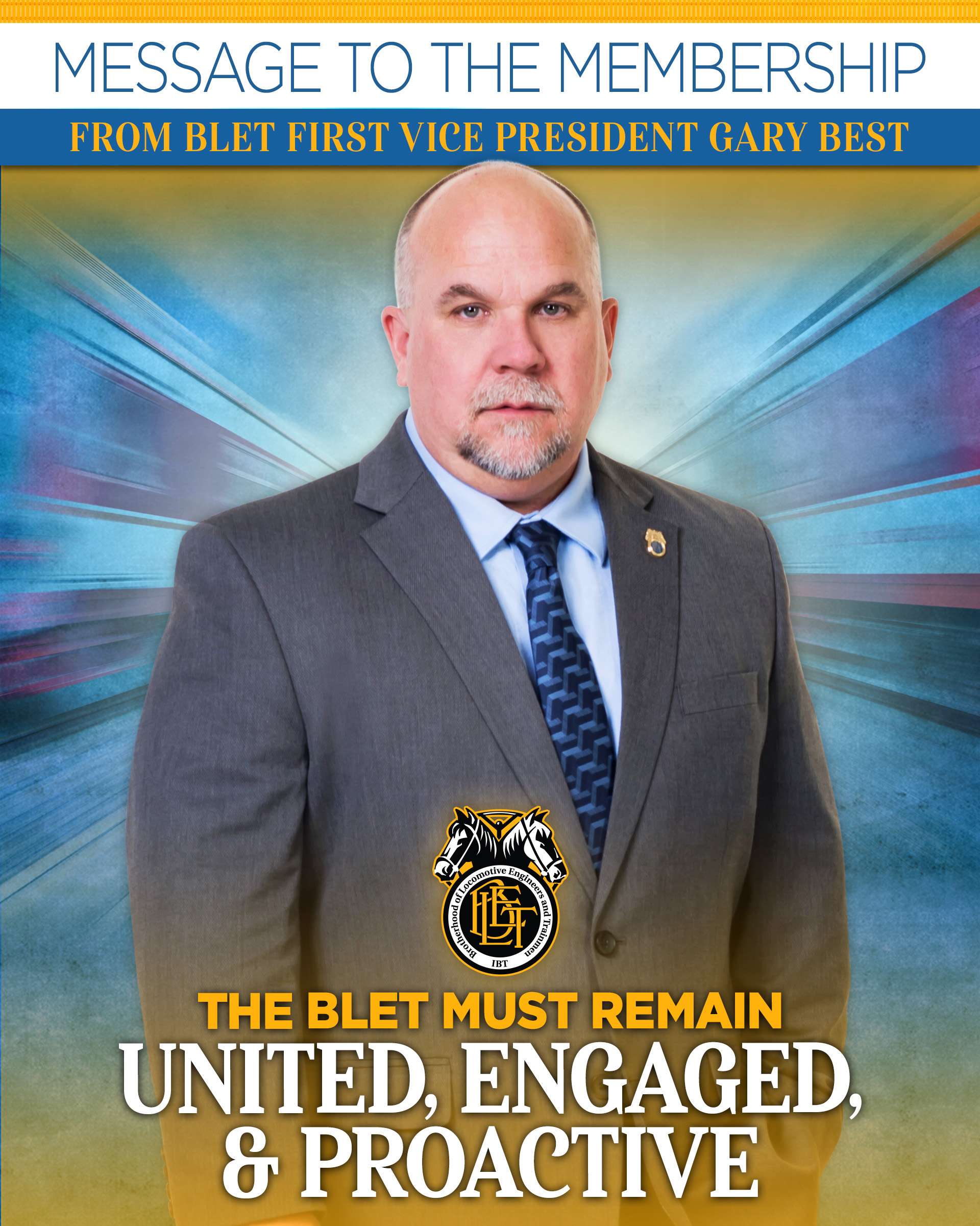
Brothers and Sisters,
When I addressed the members at our Eastern Regional in Daytona Beach last summer, I said that our Union had been in a siding for the last couple of years and had just received a signal to come out on the mainline when President Mark Wallace became our National President.
I made that statement fresh off a 66-hour strike at New Jersey Transit where I witnessed our brothers and sisters show a level of solidarity and camaraderie that I had never seen in my union career. Standing shoulder to shoulder, they proved what is possible when we remain disciplined and committed to one another. After our team successfully negotiated an agreement acceptable to the membership, the strike concluded, and I left New Jersey with a renewed sense of purpose and determination in serving you as your First Vice President.
Within days of returning home, President Wallace and I turned our attention to the southern border. We traveled to two locations in Texas, Eagle Pass and El Paso, to see firsthand how cross border rail operations are being conducted and how proposed changes could impact our members. We met with local union officers, State Legislative Chairmen, General Chairmen of jurisdiction, and members working for UP and BNSF. Our objective was clear: ensure that Mexican nationals operating trains who are allowed to enter the United States comply with U.S. safety standards and regulatory requirements, and that our members’ work and livelihoods are safeguarded.
Those efforts have produced meaningful results. In December, the FRA Administrator issued clarifications to both CPKC and UP that establish firm parameters on how cross border operations must be conducted moving forward. This represents an important step in protecting our jurisdiction and ensuring regulatory compliance. Now, it is incumbent upon all of us to remain vigilant and make certain those standards are upheld.
At the same time, President Wallace and I have been actively engaging members of Congress on the broader legislative challenges facing our craft. Our advocacy has gained bipartisan support in both the House and Senate. In the coming months, you should see legislation introduced addressing border operations, remote control operations on the mainline, rail safety measures that include two-person crews, and paid sick leave for all railroaders. These initiatives reflect sustained and coordinated effort on behalf of our membership.
We closed out 2025 by negotiating and ratifying a national agreement covering more than 12,000 of our members nationwide. Our national wage team spent four weeks traveling across the country briefing members on the terms and conditions of the tentative agreement. The engagement from the membership was strong, with an impressive voter turnout and 70% casting a ballot in favor of ratification. That participation demonstrates that when we communicate clearly and engage directly, our members respond.
Currently, I am assigned as the lead BLET representative addressing the proposed merger between Union Pacific and Norfolk Southern, which is potentially the largest railroad merger in U.S. history. If approved by the Surface Transportation Board, this consolidation would connect two Class I railroads coast to coast across more than 40 states.
Our union has formally opposed this merger based on serious safety, economic, and service concerns. History has shown that large-scale rail consolidations often result in significant operational disruptions. Any post-merger instability would not only affect our members but also communities, industries, and consumers who depend on a stable rail network. We believe this merger is not necessary for competitiveness or survival, and we agree with those who have raised concerns that railroads are not facing extinction, absent consolidation. Our focus remains on protecting safety, service reliability, competition, and the economic interests of our members and the public.
As you can see, the responsibilities of your First Vice President require constant focus and coordination across multiple fronts. Whether it’s contract negotiations, regulatory enforcement, legislative advocacy, or opposing industry consolidation, our work never slows down.
The challenges facing locomotive engineers are real, and the corporate pressures on our craft are persistent. That is why our union must remain united, engaged, and proactive. We must stay on the mainline in notch 8, focused, disciplined, and ready because our careers, our families, and the future of this profession depend on it.
Fraternally,
Gary Best
First Vice President
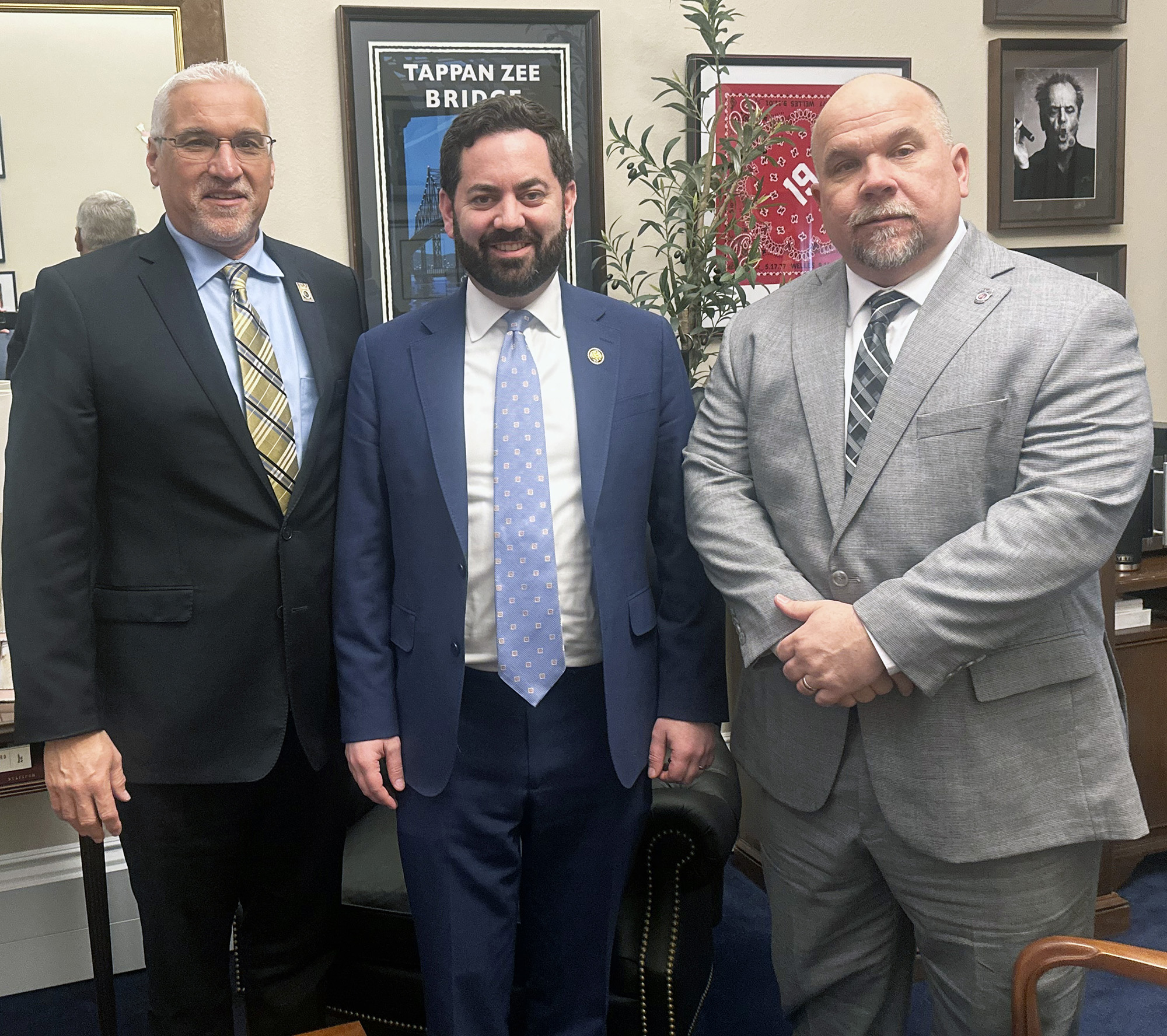
BLET National President Mark Wallace (left) and BLET First Vice President Gary Best (right) met recently with Congressman Mike Lawler (R-New York) to discuss rail legislation vital to our members.
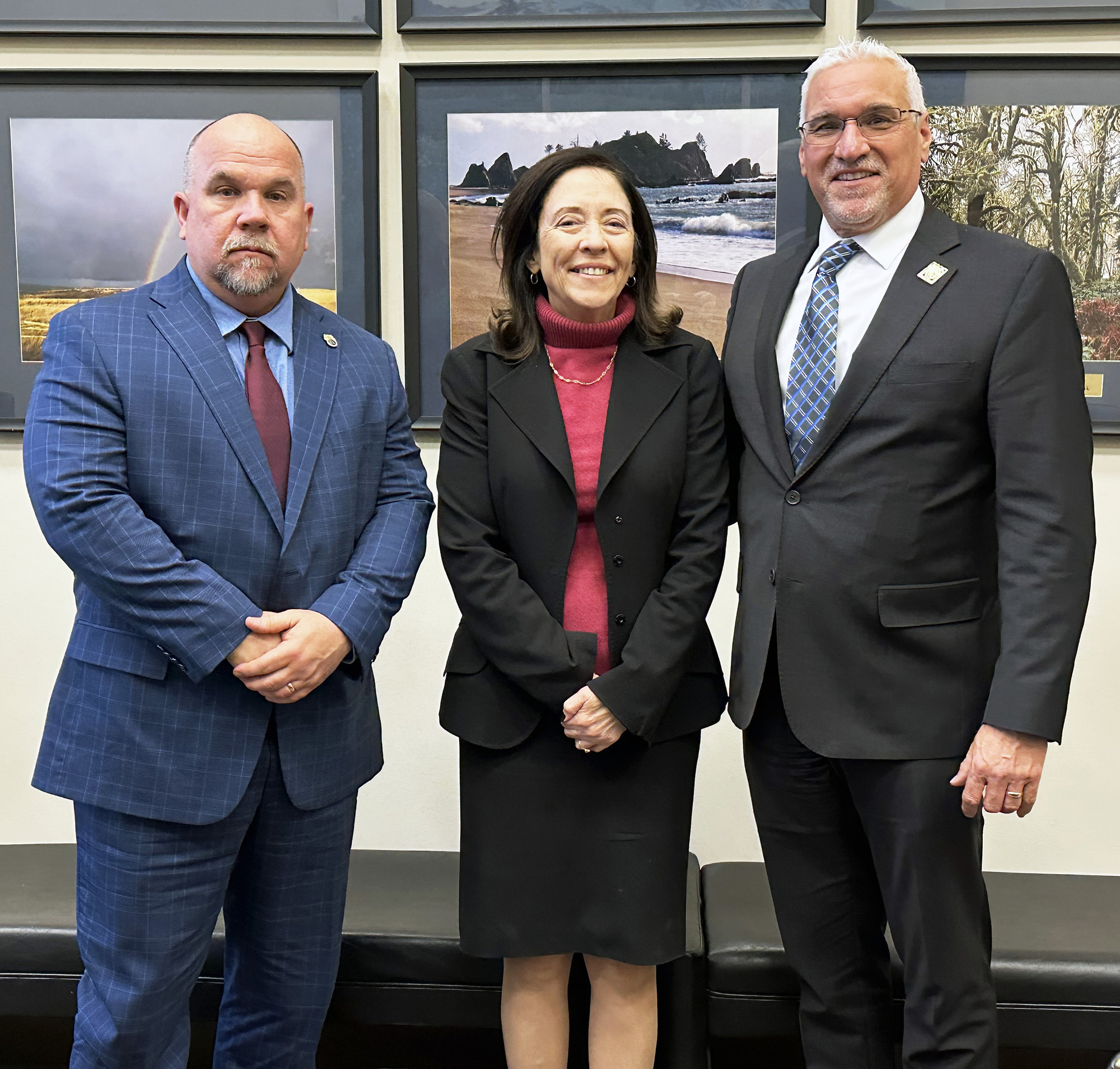
BLET National President Mark Wallace (right) and BLET First Vice President Gary Best (left) met recently with Senator Maria Cantwell (D-Washington State) to discuss rail legislation vital to our members.