
Brothers and Sisters,
Since May of 2025, when I was elevated to the position of National President, I have delivered a clear and consistent message wherever I go: this organization moves forward only when it is driven by its members. That belief is shaping every decision we make. Our strength comes from coordination, discipline, and purpose across three critical fronts — collective bargaining, legislation, and regulation. When those efforts are aligned, this union leads.
We saw the results of that approach as we closed out the year. On December 30, we ratified a National Agreement that passed overwhelmingly, a direct reflection of unity, preparation, and resolve. We were the last union to reach an agreement because we refused to rush, compromise our position, or negotiate from weakness. When I assumed the lead in negotiations in May, we fundamentally changed how we communicate. Transparency was not an afterthought — it was a priority. Members were informed, engaged, and empowered to make their own decision. That is what a member-driven organization looks like.
That same mindset now drives our work beyond the bargaining table.
This month, First Vice President Garrison Best and I met with more than 18 members of Congress and U.S. Senators — both Democrats and Republicans — to advance a clear legislative agenda. These were not courtesy visits. They were working meetings focused on protecting our members, strengthening safety, and pushing back against carrier overreach.
At the center of that effort is the Rail Safety Improvement Act (RSIA), including the two-person crew provision. Two-person crews are not a talking point — they are a safety necessity and a job-protection issue. We also advanced cross-border legislation to stop carriers from undermining American railroad jobs by using Mexican nationals to bring trains into the United States. This is a real and growing threat. We made a commitment to our members working along the southern border, and we will honor that commitment by fighting this issue in every forum available to us.
We were equally direct on remote control operations. Remote control technology must remain confined to protected yard environments. Period. We will not accept its expansion into operations that jeopardize safety, erode established work, or bypass negotiated protections. Along with that, we challenged the unchecked deployment of new technology across the industry. Innovation without accountability is not progress — it is risk shifted onto workers.
On the regulatory front, we met with the Federal Railroad Administration (FRA) to address ongoing issues stemming from the recent Department of Transportation mandate concerning English-language proficiency and the application of 49 CFR Parts 240 and 242 certification requirements. We identified that the proficiency standard was not being applied and the interpreter had to be fully certified under 49 CFR Parts 240 and 242. Crews speaking Spanish was still prevalent. Our message was simple: regulation only matters if it is enforced. We will continue bringing our members’ concerns directly to the FRA and will hold both the carriers and regulators accountable when they fall short.
We also addressed the future of the Confidential Close Call Reporting System (C3RS) pilot at Norfolk Southern. We were clear that watered-down versions of C3RS are unacceptable. This program cannot be diluted so railroads can chase headlines with hollow safety promises. Commitments made after East Palestine were not honored, and any further weakening of C3RS is unacceptable.
This work does not happen in isolation. The Teamsters and our sister union BMWED continue to coordinate closely with us on issues that affect all rail labor. Unity strengthens our leverage and our collective voice.
The direction of this organization is changing — and it is changing because the members are driving it. We are done reacting. We are setting the agenda, being proactive, and demanding accountability. But leadership alone is not enough. A strong union requires informed, engaged members who are willing to stay involved, speak up, attend meetings, and hold all of us accountable. When members are engaged, this organization is unstoppable.
The future of this union will not be handed to us — it will be built by the collective strength, discipline, and involvement of its members. That future is already taking shape, and together, we will continue to push it forward.
In solidarity,
Mark Wallace
BLET National President
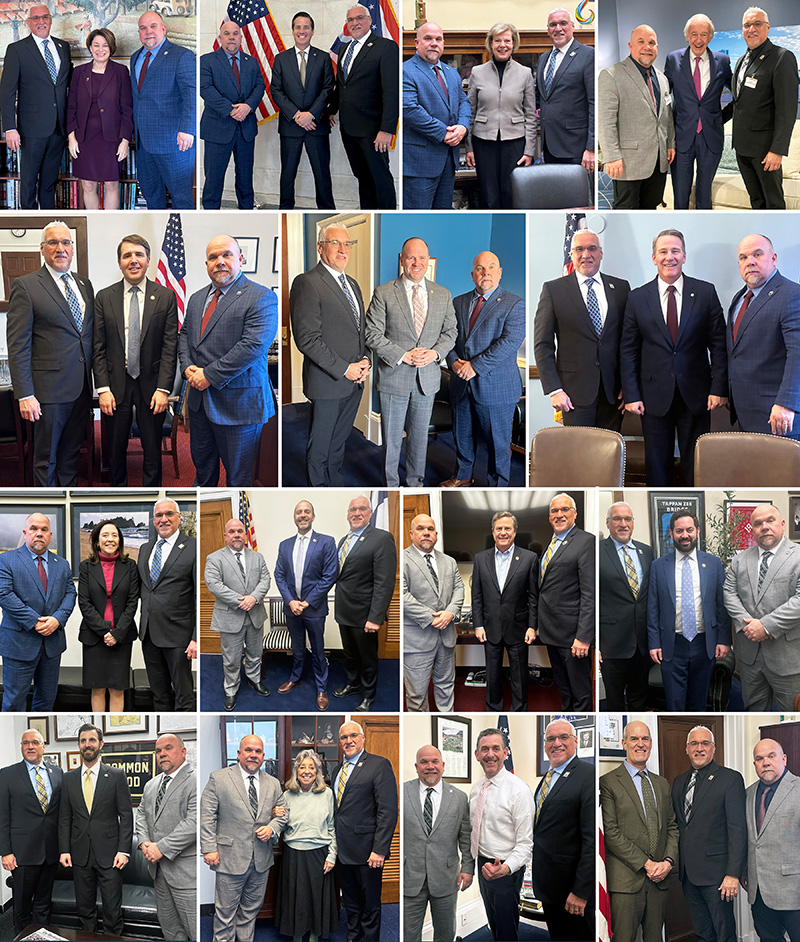
Earlier this month on Capitol Hill, BLET President Mark Wallace and First Vice President Gary Best met with more than 18 members of Congress. The meetings were with both Democrats and Republicans to lay out a clear legislative agenda for the BLET. The photos are also available in this gallery.